September 1, 2026
Tick-borne encephalitis (TBE) is an emerging public health concern in the UK, particularly in parts of southern England.
It is viral infection caused by TBE virus (TBEV) transmitted mainly through tick bites and, rarely, through consumption of unpasteurised dairy products.
The typical incubation period for TBE is 7 to 28 days. Whilst most TBEV infections are asymptomatic or result in mild, non-specific illness, a small proportion result in meningitis or encephalitis.
Tick avoidance is the best way to prevent TBE: walking on clearly defined paths, using insect repellent, performing regular tick checks, and removing ticks as quickly as possible.
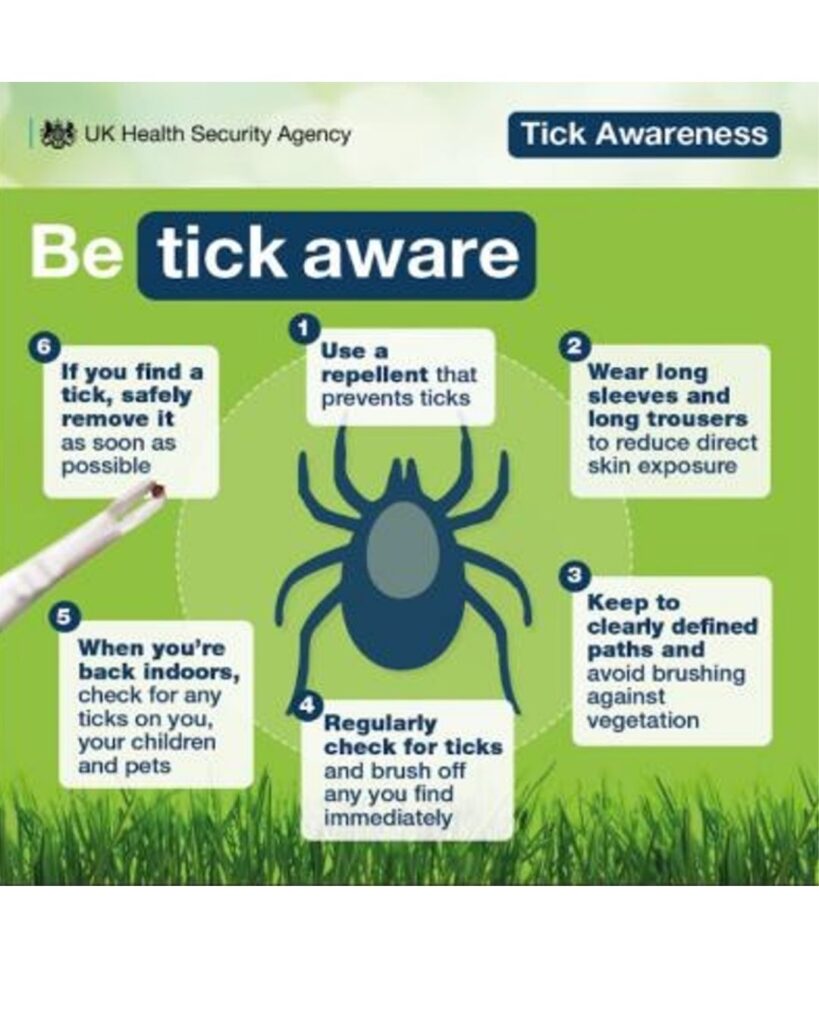
Be Tick Aware
Ticks are most active in the UK from March to October, with most bites commonly reported during May and June. Ticks can carry pathogens (microorganisms that cause disease) such as Lyme disease and, more rarely, tick-borne encephalitis.
Ticks live in many different outdoor environments, often found in woodland, rough upland or moorland pastures, heathland, grazed grasslands and some urban parks. You are more at risk of being bitten when taking part activities such as hiking, cycling or camping, but ticks can also sometimes be found in urban gardens.
There are a variety of simple ways you can reduce their chances of being bitten and if you are bitten, what you can do to safely remove a tick:
Decrease your chances of getting bitten
- apply a repellent
- wear long sleeves and trousers to reduce direct skin exposure
- keep to clearly marked pathways when outdoors
- regularly check for any ticks and brush off any you find immediately
- most importantly, continue checking for ticks when back indoors on yourself, as well as your children and/or pets
What to do if you’re bitten
If you find a tick on your body:
- remove the tick as soon as you can, either using a tick removing device or fine-tipped tweezers
- grab the tick as close to the skin as you can and pull upwards
- clean the area with soap and water
- keep an eye on the bite area for a few weeks in case of any changes
- if you see a spreading bullseye rash developing, or you become unwell with flu-like symptoms or a headache, contact your GP or NHS 111 immediately.
If you have any questions, please email externalaffairs@ukhsa.gov.uk.